
The Cost of Waiting Another Season
Put this off through one more round of storms and the math changes fast. A garage door that buckles under wind pressure doesn't just need a new panel — it can bend tracks, snap rollers, strip the opener's drive gear, and in the worst cases let wind get behind the door and push upward on the roof deck. A tune-up you could have scheduled for a normal service call turns into an emergency repair, plus whatever water or debris gets into the garage while the door is out of commission. If that garage shares a wall with living space, you're also looking at drywall, insulation, and flooring repairs that have nothing to do with the door itself.
Why the Garage Door Is a Home's Weakest Wall
Every other exterior wall on a house is a continuous, braced structure. The garage door opening is the biggest hole in that envelope — often nine or sixteen feet wide — covered by a panel system that's only as strong as its tracks, rollers, hinges, and the connection points holding it to the frame. When wind hits the front of a house, it builds pressure against that door like a sail. If the door isn't rated for it, or the hardware behind it is already worn, the door can bow, pop out of its tracks, or get pushed in hard enough to compromise the opening itself. Once that happens, wind gets inside the structure and starts pushing on the roof from underneath — which is how a garage door failure turns into roof damage during a bad storm.
What This Season Actually Brings
Wind and Storm Remnants
Late fall in this part of Tennessee still carries the tail end of tropical systems moving up from the Gulf, which show up here as heavy rain bands and gusty straight-line wind rather than a hurricane itself. Those wind events are exactly the kind that catch an aging garage door off guard — sudden gusts, not sustained pressure, which is harder on loose hardware and worn springs than steady wind.
Heavy Rain and Moisture
Along with the wind comes heavy rain, and with the pine cover common around garages in this area, that means standing moisture at the base of the door and along the bottom seal for days at a time. Worn weatherstripping lets water track under the door and onto stored items, and the humidity that follows can swell wood trim around the opening, making the door bind or close unevenly.
The Ice Storms Still to Come
Once this round of wind and rain passes, the next seasonal shift is the ice storms that hit this region later in winter. Cold snaps tighten steel springs and stiffen lubricant on rollers and hinges, so hardware that's already stressed from a fall windstorm is more likely to fail outright once temperatures drop. Getting ahead of storm prep now also sets the door up better for that cold-weather stress later.
A Pre-Storm Inspection Checklist
Before the next wind event rolls through, walk the door and check these points:
- Track alignment: Look for gaps between rollers and track, or rust and bent sections — these are the first things to give under wind pressure.
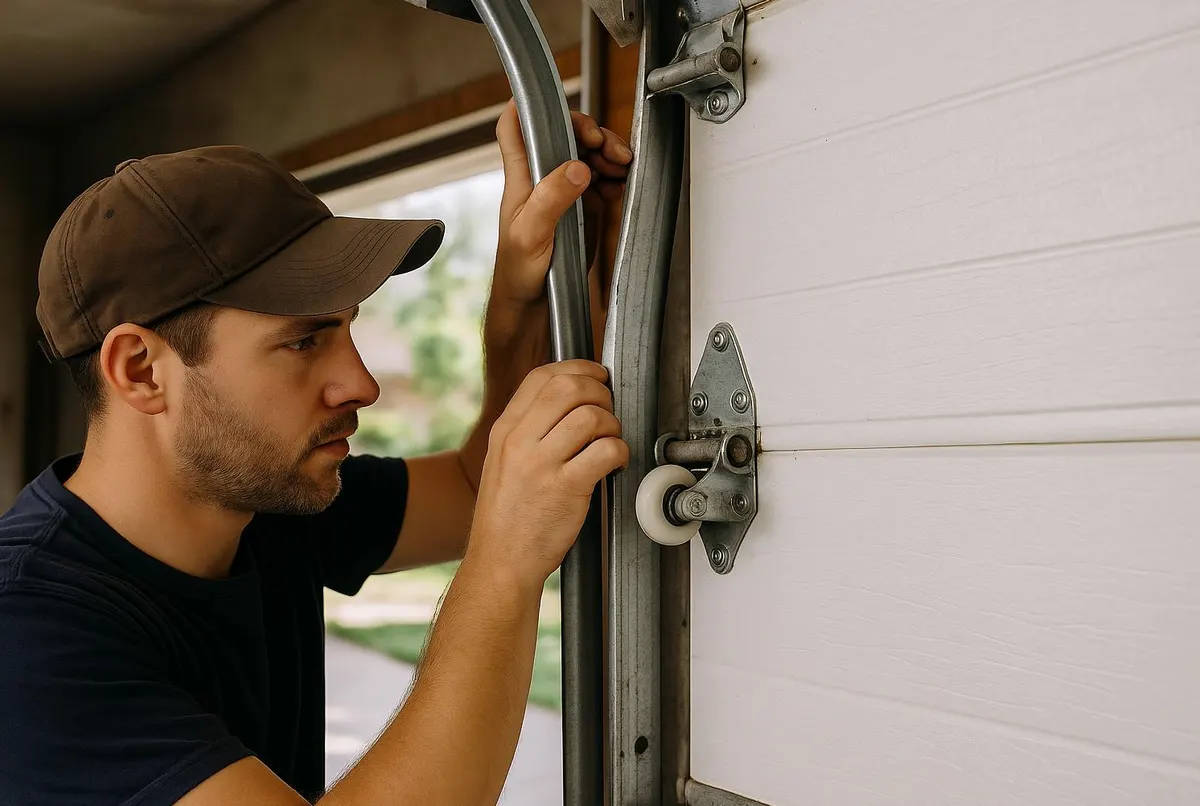
- Hinges and rollers: Worn or cracked hinges let panels flex more than they should. Replace anything with visible metal fatigue.
- Spring condition: Rust, gaps in the coils, or a door that feels heavier than usual to lift manually are signs the springs are near the end of their life — exactly what you don't want to find out during a storm.
- Weatherstripping and bottom seal: Cracked or flattened seals let in wind-driven rain. These are a low-cost fix with a real payoff during heavy rain weeks.
- Reinforcement struts: Horizontal struts across the back of each panel add stiffness against wind load; check that existing struts are still tightly fastened.
- Opener battery backup: Storm-related power outages are common with high wind events. A battery backup keeps the opener working, and more importantly keeps you from having to manually crank a door with failing springs in the middle of a storm.
Reinforcement Options and Trade-offs
If the inspection turns up real wind vulnerability rather than just wear, there are a few paths, and they come with different costs and timelines. Retrofit bracing kits that add vertical struts to an existing door are the cheaper option, generally in the low hundreds of dollars as a national range, and can be installed without replacing the door. A wind-rated garage door is the stronger long-term fix — these are built with reinforced panels and heavier-gauge tracks designed to handle higher pressure loads, but they cost more upfront, often in the low thousands depending on size and material. For most homes here, reinforcing a door that's otherwise in good shape is the more practical move; full replacement makes more sense once the door is already old, rusted, or undersized for the opening.
When to Call Dandridge Garage Door
If your inspection turns up rusted springs, a door that's noticeably heavier to lift, or hardware that looks bent or misaligned, that's past the point of a DIY fix. Dandridge Garage Door handles spring replacement with properly matched tension for your door's size and weight, which matters more than people expect — mismatched springs are a common cause of sudden failure during wind events. We also run garage door maintenance visits that cover the full hardware check above, tighten what's loose, and flag anything that won't hold up once the colder, icier months hit.
Don't wait for the next wind event to find out what your garage door can't handle. Call Dandridge Garage Door today to schedule a storm-readiness check for your home in Dandridge, TN and the surrounding Jefferson County area.