
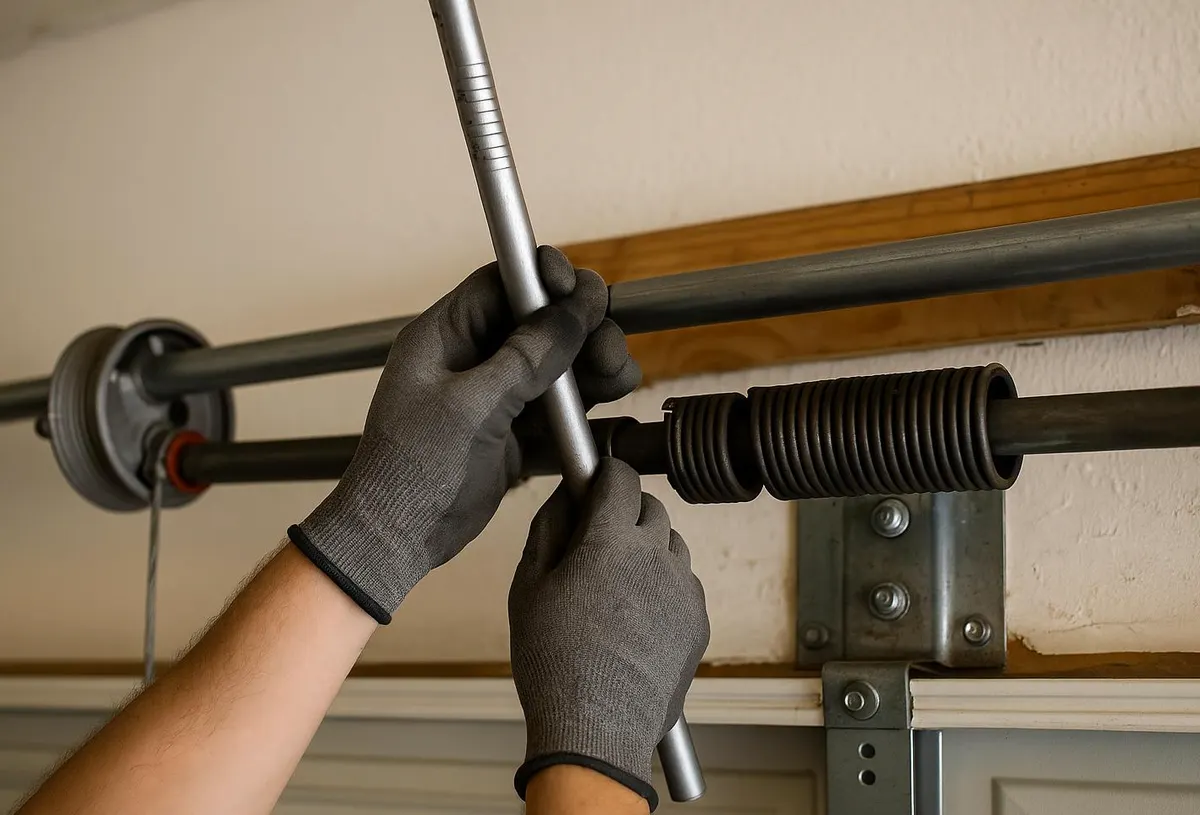
What a Technician Sees This Time of Year
By late October, the service calls start to shift. A homeowner calls because the door suddenly feels heavier when it opens, or it's making a grinding noise it didn't make in July. Nine times out of ten, the culprit is the same: a garage door that coasted through a humid summer without any maintenance, now meeting its first cold snap. Metal contracts, old grease thickens, weatherstripping that was already cracked from UV exposure finally gives out, and homeowners notice all at once that the door isn't sealing, isn't balanced, or isn't moving the way it should.
None of this is dramatic on its own, but ignored through a Tennessee winter, small issues turn into stuck doors, frozen tracks, or a spring that snaps on the coldest morning of the year. Fall is the window to catch it before that happens.
Why This Climate Is Hard on Garage Doors
The stretch from hot, humid summers into ice storms is tougher on a garage door than most homeowners realize. A few things happen here specifically:
- Temperature swings stress metal springs and hardware. Torsion springs lose a bit of tension as temperatures drop, which is why a door that opened smoothly in September can feel noticeably heavier in December.
- Humidity and moisture promote rust. Garages near pine trees or with poor drainage collect moisture and debris around the bottom of the door, and that moisture doesn't fully dry out before cold weather locks it in, accelerating corrosion on tracks, hinges, and the bottom seal.
- Occasional ice storms put real load on openers and springs. Ice buildup on the bottom panel or along the tracks adds weight the opener has to fight through, and a motor already working harder in cold air doesn't need that extra strain.
- Old weatherstripping fails right when you need it most. Heat and UV exposure over the summer make rubber seals brittle, so by the time cold, wind-driven rain or ice shows up, the seal that should keep it out is already cracked.
A Practical Pre-Winter Checklist
1. Inspect and Replace Weatherstripping
Walk around the bottom seal and side seals while the door is closed. Press on the rubber — if it's stiff, cracked, or doesn't spring back, it's not doing its job. A worn seal lets in cold air, wind-driven rain, and pests looking for shelter. Replacement strips are inexpensive and usually a straightforward DIY job if you're comfortable removing a track and fitting new material.
2. Lubricate Moving Parts
Hinges, rollers, and the torsion spring itself all benefit from a fresh application of a garage-door-specific lubricant before cold weather sets in. Thickened or dried-out grease is a common reason doors start grinding or hesitating once temperatures drop. Avoid WD-40 as a long-term lubricant — it's a solvent, not a lubricant, and tends to strip old grease without adequately replacing it.
3. Check and Tighten Hardware
Vibration from regular use loosens bolts, brackets, and roller hardware over time. A quarter-inch socket wrench and ten minutes checking the track brackets and hinge bolts can prevent a rattle from turning into a misaligned track in January.
4. Test the Balance
Disconnect the opener (pull the release cord) and lift the door manually about halfway. It should stay in place on its own. If it drifts up or falls, the springs are out of balance — a sign of wear that's worth addressing before cold weather adds strain. This isn't a job to do yourself beyond the test; torsion springs are under serious tension and are dangerous to adjust without the right tools.
5. Clean and Inspect the Tracks
Pine debris, pollen residue, and dirt accumulate in the tracks over a Tennessee summer and can freeze into place once temperatures drop. Wipe tracks down with a damp cloth and check for dents or misalignment while you're at it.
6. Look at the Opener's Battery Backup
If your opener has a battery backup, test it now. Ice storms in this region occasionally knock out power, and a dead backup battery means a garage door that won't open manually-friendly without the release cord — inconvenient if you're trying to get a car out before a storm.
7. Consider Insulation If the Garage Connects to the House
For attached garages, an uninsulated door lets cold air into a space that shares a wall with living areas, which can raise heating costs and contribute to condensation issues. Insulated garage doors or retrofit insulation kits are worth considering if you've noticed the garage feels noticeably colder than the rest of the house.
When to Call Dandridge Garage Door
Some of this checklist is reasonable for a homeowner to handle on a Saturday afternoon. But if the balance test shows a problem, if you hear grinding or popping sounds, or if the door has started reversing unexpectedly, that's a sign to call rather than keep testing it yourself. Dandridge Garage Door handles spring replacement and garage door maintenance throughout Jefferson County, and a pre-winter maintenance visit typically includes a full inspection of springs, cables, rollers, and opener function — catching the kind of wear that turns into an emergency repair call during the first hard freeze.
If your opener has been struggling or cycling oddly, that's also worth a look now rather than after it fails during an ice storm. A technician can diagnose whether it's a sensor, a worn gear, or simply a motor working against an unbalanced door.
If you're in Dandridge, Jefferson City, White Pine, New Market, Morristown, Strawberry Plains, Sevierville, or Newport and want your garage door checked before winter weather arrives, call Dandridge Garage Door to schedule a maintenance visit today.